
Most of us can agree that Canada is one of the best places in the world to live. We have a democratic society and a generally safe environment for our citizens to reside in harmony. Our vast geography and abundant natural resources make Canada the envy of the world. So, naturally, this relatively welcoming country attracts individuals and families from around the world who intend to make Canada home. The challenge is, where will they live? In this article, we will provide an overview of the contributing factors to Canada’s rental housing supply shortage.


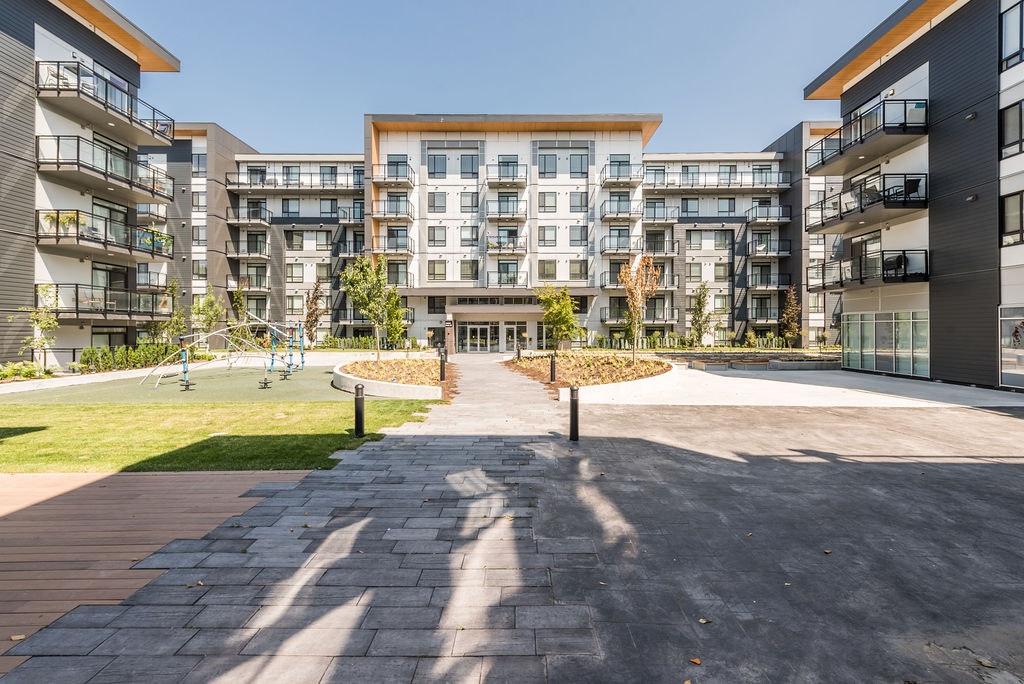
Multi-Family Rental - The Rex Apartments, Abbotsford, B.C. | 207 Units – Completed in 2021
How did we get here?
In Q1 2020, shortly after the onset of COVID-19, Canada’s population was hovering around 38 million people. Since that time, Canada’s population has increased and has now surpassed 40 million people. While the increase in immigration is encouraging, it appears to have caught many of us, off guard. This figure does not take into account the growing number of international students enrolling in our universities at a record pace. With immigration continuing at a rate of 1.0 million new residents per year, the pressing question arises: How can we ensure an adequate supply of housing for everyone?
How can Canadians afford housing?
Since March 2022, the Bank of Canada has increased interest rates ten consecutive times from 0.25% to 5.0%. Economic experts suggest more interest rate hikes are coming as the Bank of Canada is determined to bring inflation back down to 2.0% and maintain that level for a sustained period. While in the long term this may be seen as a prudent strategy, it is also translating to serious short-term pain for a lot of Canadians. If inflation can be tamed by Q4 2023 through to Q2 2024, then perhaps we can expect the Bank of Canada to start easing the interest rates to help stimulate the economy. However, we may never get back to the historic low interest rates experienced in February 2022 as access to cheap money contributed significantly to our current high inflationary environment. Dropping halfway may be a good compromise.
In the meantime, higher interest rates have all but eliminated the affordability for the average Canadian to realize their homeownership dream unless they get financial aid from a third party, often family. The higher interest rates also present challenges for developers of condominiums and single-family homes to build and sell their products to the end consumer at affordable pricing. Rising interest rates have also applied more pressure to the already undersupplied rental stock. Whether it is home ownership or rental accommodation, Canada has a serious problem.
How does new supply help affordability?
The vacancy rate for multi-family rental apartment product is consistently low, typically in the single-digit range. This shortage of available rental properties is a supply issue that affects the housing market. Higher rents not only impact individuals’ housing costs but also contribute to overall inflation, consequently affecting factors such as job wages and consumer goods prices. In cities like Toronto and Vancouver, the vacancy rate is even lower than single digits, often below 1.0%, and has remained so for an extended period. It is common for landlords and owners to be blamed for charging high rents, but it’s important to note that rent control policies typically limit increases to around 2.0% and often fail to keep pace with the rising costs of property taxes, insurance, and building repairs/upgrades. Increasing the supply of new rental units would alleviate the pressure on rents for consumers. Unfortunately, many developers and apartment owners face significant obstacles, such as the speed of bringing new units to market and the high costs involved, which hinder their ability to provide additional rental housing options. Consequently, we feel that current government policies discourage developers from constructing new rental properties.
How can our government help?
Federal, provincial, and municipal governments express their desire to address the issue of housing supply, but their proposed solutions often involve more taxes and fragmented approaches. It is crucial for all three levels of government to collaborate and work together to resolve the housing crisis.
Each government has a vital role to play in finding solutions. Here are some recommended measures that we feel can help stimulate the rental housing supply:


Multi-Family Rental - Spencer Block, Victoria, B.C. | 278 Units – Under Construction
On a federal level:
- Eliminate GST on new rental apartment buildings payable by developers and on new condominiums for home purchasers. Developers are already paying GST on the materials that go into building these structures. We feel this can be a significant cost in both scenarios and deteriorates affordability.
- Allow 10-year GST deferrals which would provide rental housing developers the opportunity to pay GST over time with stabilized rental income. This can reduce financeable project costs and requirements in the capital stack.
- Provide low interest rate construction loans in the 1-2% range to encourage developers of multi-family rental apartment buildings and condominiums, supplying the market with new housing options.
- Ease the Prohibition on the Purchase of Residential Property by Non-Canadians Act which is negatively impacting developers who have traditionally relied on this buyer group to support new condominium towers.
- Provide improved financing options not only for first-time buyers but also for citizens below a certain income level.
- Ease the mortgage stress test so that more people can afford their first home purchase.
- CMHC could expand upon and enhance its RCFI and MLI Select rental construction financing program to encourage more rental housing construction to proceed.
- Help provide funding to hire more staff at CMHC (more on that below).
On a provincial level:
- Reduce the property purchase tax which can be a heavy burden on citizens with limited budgets, particularly first-time buyers.
- Assist municipalities in offering a 10-year "property tax holiday" for new multi-family rental apartment buildings. We feel this will reduce overall costs and enable reduced rents for tenants.
- Help municipalities cover overhead costs to staff up planning departments and expedite the approval process.
- Hold municipalities accountable for delayed processing. We feel there should be a cap on timing for approvals and permits which creates predictability.
- Provide funding to developers who build for 100% low-cost non-market housing.


Multi-Family Rental - The James at Harbour Towers, Victoria, B.C. | 219 Units – Completed in 2020
On a municipal level:
- Create and adhere to predictable processing times for approvals and permits. Eliminate any potential red tape and improve the speed to market. Based on our experience, the rezoning process alone can take as much as 24-36 months which puts a heavy burden on developers for holding costs. Elongated project schedules also erode affordability.
- Reduce development cost levies to help improve project costs for developers. Extend payment deadlines for the development levies to the end of the project once stabilized and ready for occupancy permit.
- Provide a 10-year property tax holiday for all new multi-family rental apartment projects to encourage developers and apartment owners to provide new supply.
- Eliminate or significantly reduce the empty homes tax.
- Waive the rezoning public hearing process, at the advice of the planning department, for projects that adhere to city policies. Projects that do not challenge policy should be expedited. This would reduce processing time.
- Compress and expedite projects that deliver significant affordable housing, rental housing, and job space.
- Significantly reduce or remove Development Cost Levies for rental housing charged by municipal governments.
How does CMHC play a role in solving the housing shortage?
The Canada Mortgage and Housing Corporation (CMHC), established by the federal government, serves a critical role in providing insurance to lenders for developers seeking construction and term financing. However, CMHC is currently experiencing delays in processing loan applications. This delay has resulted in our team witnessing a backlog of approximately five to six months, with no signs of relief in sight. Prompt and effective action is necessary for the federal government to address this issue.


Multi-Family Rental - Meridian, Coquitlam, B.C. (Partner: Townline) | 267 Units – Under Construction
What is the impact if we could bring all three levels of government together?
In our opinion, there are several potential benefits that could result from addressing the housing supply shortage and making housing more affordable. While these points are subjective, they present potential positive outcomes:
- It would take pressure off inflation as increased housing supply would surely bring costs under control making housing more affordable for consumers whether renters or home-owners.
- Collaboration at all government levels would generate more jobs and spur more education and training for trades schools, colleges, and universities.
- Developers would have more incentive to deliver new supply at affordable cost in a timely manner.
If all levels of government can work together, we can truly make Canada not only a great place to live and work but also an affordable one. It will also help make the Canadian dream of home ownership achievable.
The multi-family rental apartment building asset class is considered by most sophisticated investors as the preferred asset class. It is viewed as a safe investment with minimal vacancy risk notwithstanding the low rental growth constraints caused by rent control.
Our federal government recently elected to spend up to$15.0 billion to Stellantis in production incentives to save the electric vehicle plant in Windsor, Ontario. This funding move was on the heels of the federal government and Ontario promising up to $13.0 billion to Volkswagen in production subsidies for every battery the company makes and sells.
If you were to apply this combined $28.0 billion granted to these foreign multinational companies and applied an average cost of $300,000 to build a new apartment unit in Canada, these same funds would generate over 93,000 new apartment units. We believe that providing affordable housing supply is equally as important as job creation.
We recognize that many of the suggestions listed above could be viewed as “lost revenue” and/or unpopular.
Our Nicola Wealth Real Estate team has been active in building new multi-family rental apartment product in British Columbia. A few examples of completed projects and projects currently under construction include:
- The Rex Apartments – Abbotsford, B.C.
- Spencer Block – Victoria, B.C.
- The James at Harbour Towers – Victoria, B.C.
- The Meridian – Coquitlam, B.C.
These projects are adding to the new supply that is needed in our province. Our team has several other projects in the queue that will contribute additional supply, but the costs are much higher and taking longer.
The Nicola Wealth Real Estate (NWRE) team is headquartered in Vancouver and is comprised of an experienced & diversified team of 65 specialists with a broad range of experience in different sectors of real estate. The NWRE team manages the three open-ended evergreen real estate limited partnerships for Nicola Wealth and their clients. The funds include the Nicola Canadian Real Estate Limited Partnership (NCRE LP), Nicola U.S. Real Estate Limited Partnership (NUSRE LP) and the Nicola Value Add Real Estate Limited Partnership (NVARE LP).
This material contains the current opinions of the author and such opinions are subject to change without notice. This material is distributed for informational purposes only. Forecasts, estimates, and certain information contained herein are based upon proprietary research and should not be considered as investment advice or a recommendation of any particular security, strategy or investment product. Information presented here has been obtained from sources believed to be reliable, but not guaranteed. All investments contain risk and may lose value. Please speak to your Nicola Wealth advisor for advice based on your unique circumstances. Nicola Wealth Management Ltd. (Nicola Wealth) is registered as a Portfolio Manager, Exempt Market Dealer and Investment Fund Manager with the required securities commissions. This is not a sales solicitation. This investment is intended for tax residents of Canada who are accredited investors. Please read the relevant documentation for additional details and important disclosure information, including terms of redemption and limited liquidity. For a complete listing of Nicola Wealth Real Estate portfolios, please visit https://realestate.nicolawealth.com.


